• ConnectNFC
  • SenseSoil moisture
  • Form factorSnow globe
  • VibeVintage radio
  • TwistWorks fully offline

Plantasia

A design proposal for a magic wand that checks on your houseplants: touch its crystal orb to a little sensor in the pot to see how the soil is doing, hear a chime, and leave a spoken note.

The idea: a plain two-prong sensor lives in each pot and quietly logs the soil's moisture every hour for weeks. When you touch the wand's orb to its leaf emblem, the wand reads that log over NFC, shows the plant's name and moisture on a slim screen, glows green, amber or red, and plays a short synth chime. Hold the button to leave a note, transcribed on the wand itself. Nothing ever goes online: plug the wand into a computer and it shows up as a drive full of plant records.

400 mm
Orb to ferrule, just under 16 in
Orb to leaf
An NFC tap, no pairing
Fully offline
No app, no Wi-Fi, no account
~4 years
Sensor on one coin cell (estimate)
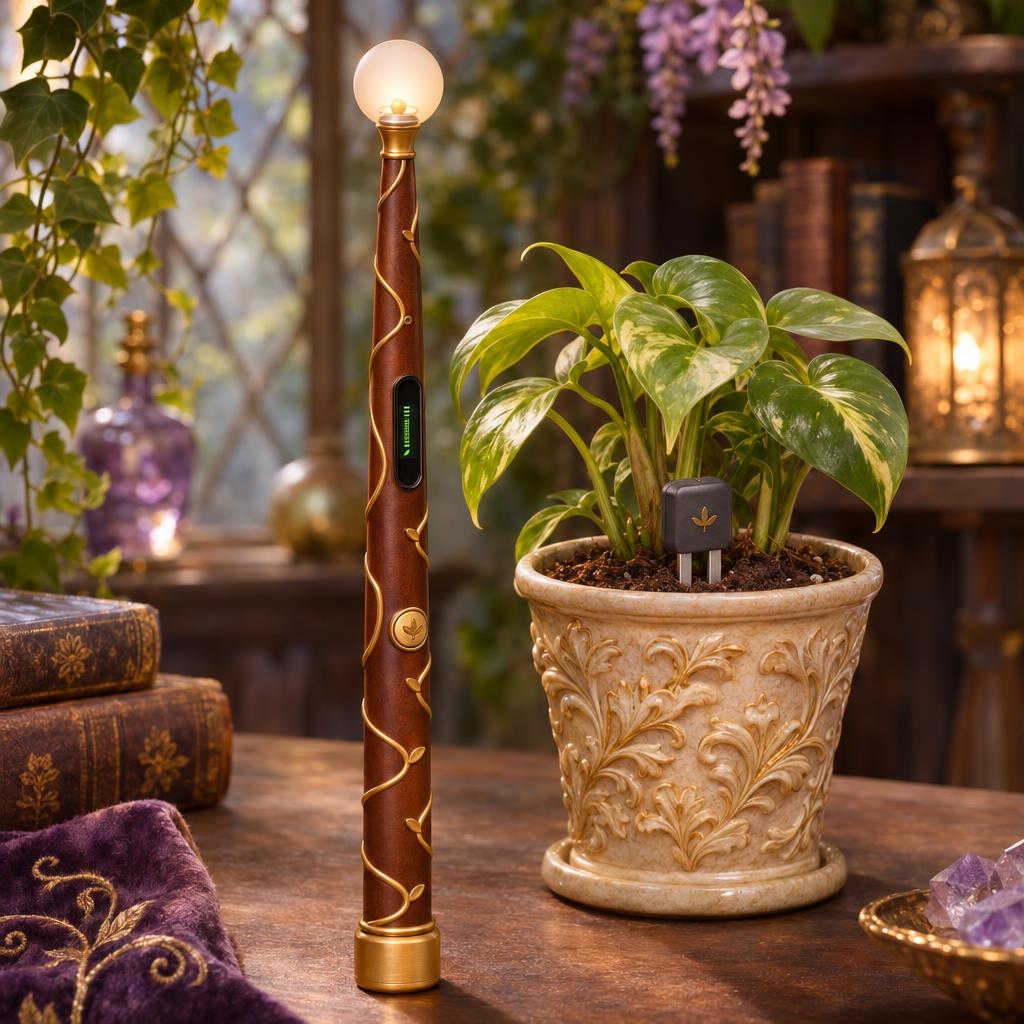
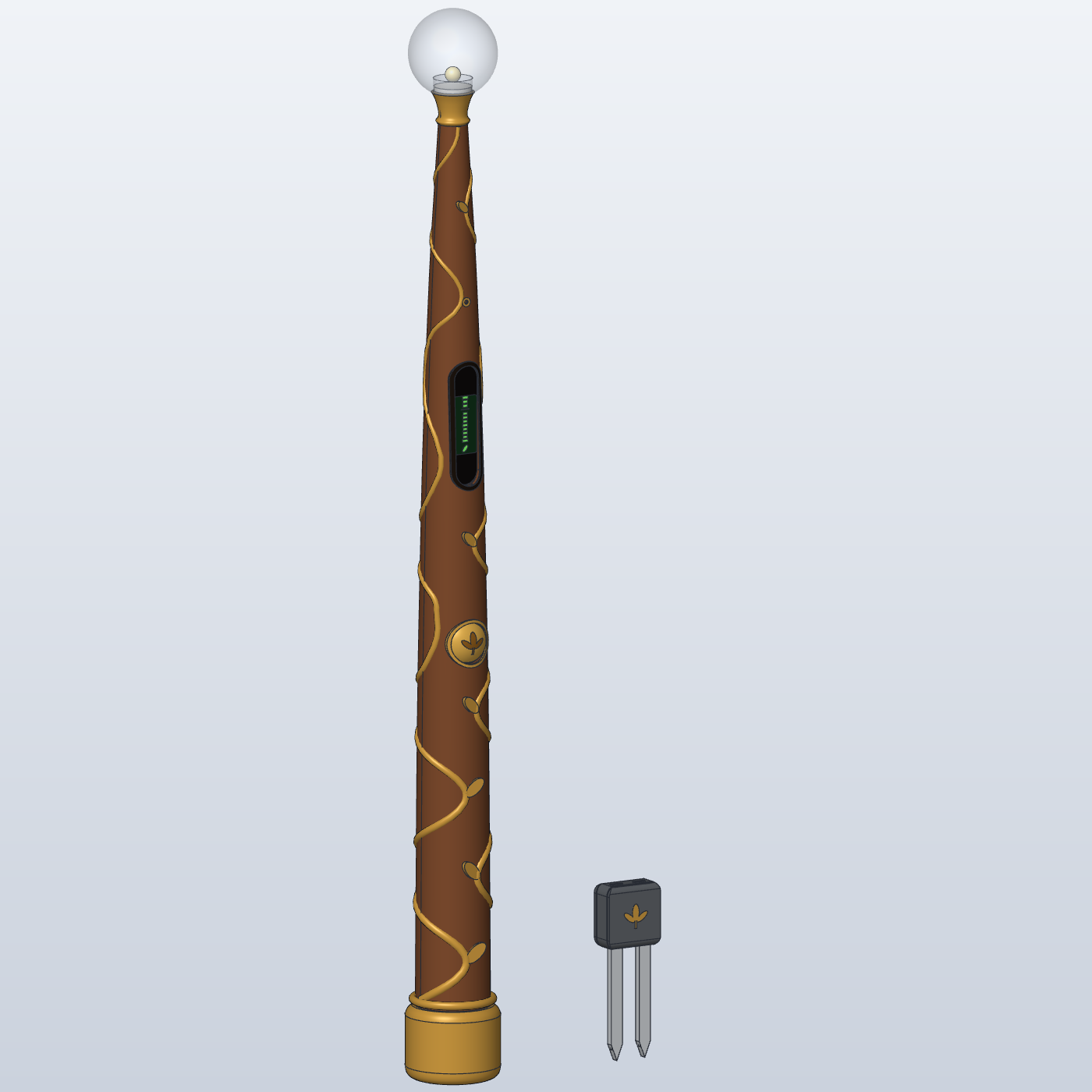
A walnut-brown wand wound with gold vines, standing upright on its gold ferrule, with a glowing crystal orb on top, a slim green-lit screen and a round gold leaf button, beside a pothos in a carved cream pot where a small grey sensor with a gold leaf emblem stands in the soil on two prongs
An AI render of the CAD model: a concept that hasn't been built. The wand is 400 mm long; the real sensor's head is only 22 mm wide.

A check-in that feels like a spell

The roll said snow globe. The hosts heard a wizard's wand with a tiny crystal ball on top, and someone who talks to their plants.

The plant parent

Twenty pots, and a finger in every one

Their plants have names and personalities. Instead of poking the soil, they'd make a slow round of the flat with the wand, one touch per pot, and see "Pothos | 18%" before the leaves start to droop. If a plant goes unchecked for days, the orb would glow on the shelf as a gentle reminder, and a quick spoken note ("new leaf unfurling") would keep a journal without a notebook.

Fantasy and cosplay fans

Want the tech, not the look of it

The wand is designed to feel like something from a theme-park gift shop: carved walnut, gold vines, a lit crystal. There's no app to open and no phone to pull out. As Jordan put it in the brainstorm, when you're in the mood to care for your plants, the last thing you want to do is reach for your phone.

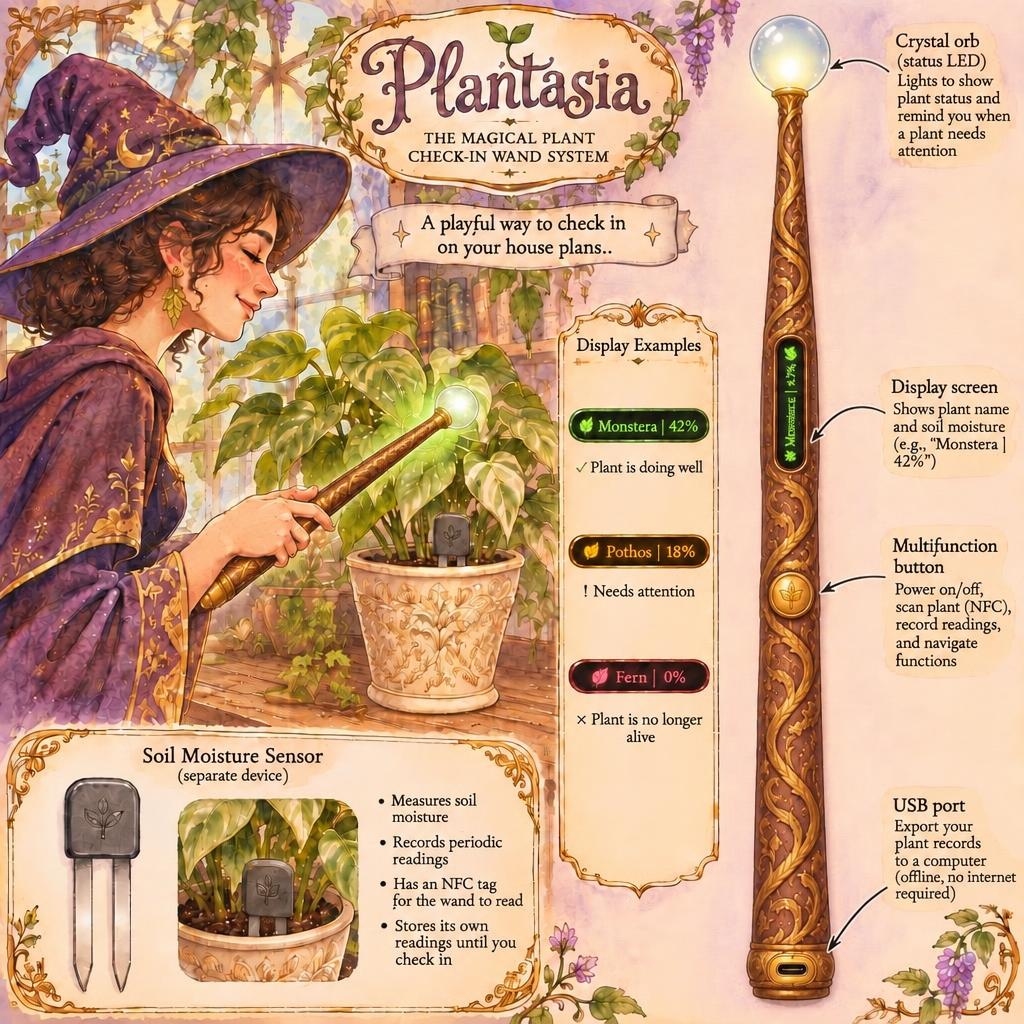
Concept art titled Plantasia: a woman in a purple witch's hat touches a glowing wand to a sensor in a plant pot; beside her, the wand's orb, screen, button and USB port are called out, with screen examples Monstera 42%, Pothos 18% and Fern 0%
“Monstera | 42%”Orb to leaf, a green glow and a rising three-note chime. The Monstera's fine; on to the next pot. Stage 2 concept art, the hosts' favourite.

A round of the room

Move the wand around the room and click a plant to touch the orb to the sensor in its pot (on a phone, tap it). Then follow what passes between the two devices, slowed right down. Sound on: the chimes are little synth tones, not a voice.

The orb has to touch the sensor's leaf: NFC only reaches a centimetre or two, so there's no pointing from across the room.

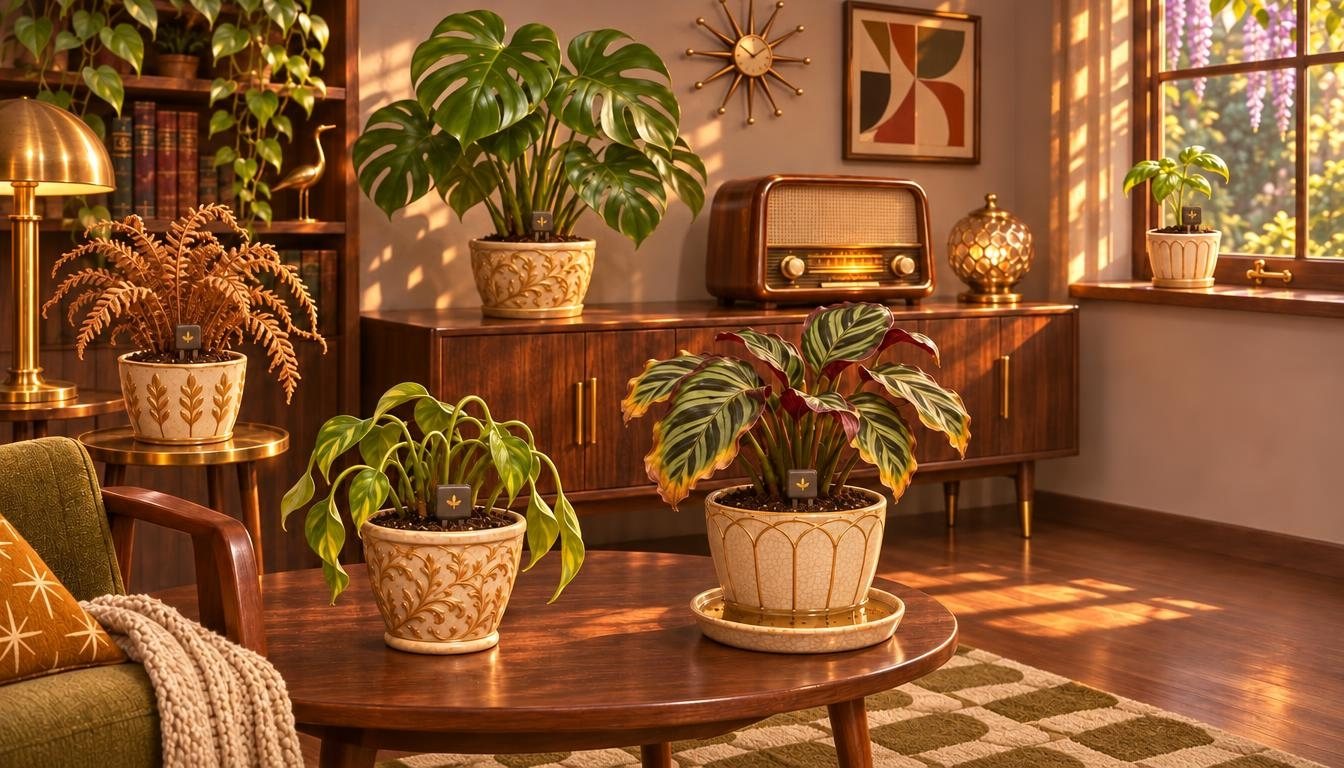
A warm mid-century living room in late-afternoon light, with a small sensor in the soil of each of five potted plants: a crispy brown fern by the bookshelf, a monstera on the sideboard beside a vintage radio, a drooping pothos and a calathea with yellowing edges on the coffee table, and a basil seedling on the windowsill.
Plantasia
The wand says

Pick a plant to check.

    The room is an AI painting and the logs are made up for the demo. The timings come from the design (SYSTEM.md), not from a built wand.

    43D model in Solidcraft

    The wand and its sensor

    One first-pass CAD model holds both devices at the same scale, with the boards, battery, screen and speaker drawn inside from the real parts. Drag to spin it.

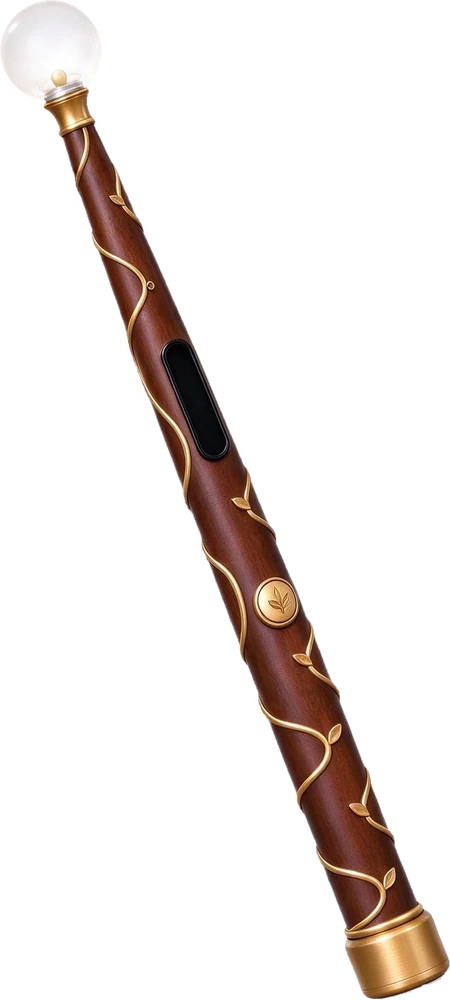
    1. Crystal orbA Ø33 mm solid acrylic ball in a gold cup. A 14 mm disc under it carries both the NFC coil and an RGB LED, so the glow and the read happen at the same spot.
    2. Bar screen and micA 0.96" colour screen behind a black lens in a curved bezel, drawing green text on black like the concept. The mic's pinhole sits just above it.
    3. Sprout buttonA Ø15 mm gold button where the thumb falls: press to wake and scan, hold to record a note.
    4. Walnut shaft, gold ferruleA front and back clamshell with moulded vines. The back carries the speaker grille and, low on the ferrule, the one USB-C port, so the cable trails away from the hand.
    5. Soil sensorA pewter-grey head, 22 × 23.5 × 10.6 mm, on 42 mm prongs, about the size of a common Grove moisture probe. The leaf emblem marks where to tap; a coin door is on the back.
    5Electronics in KiCad

    Two boards, one tap

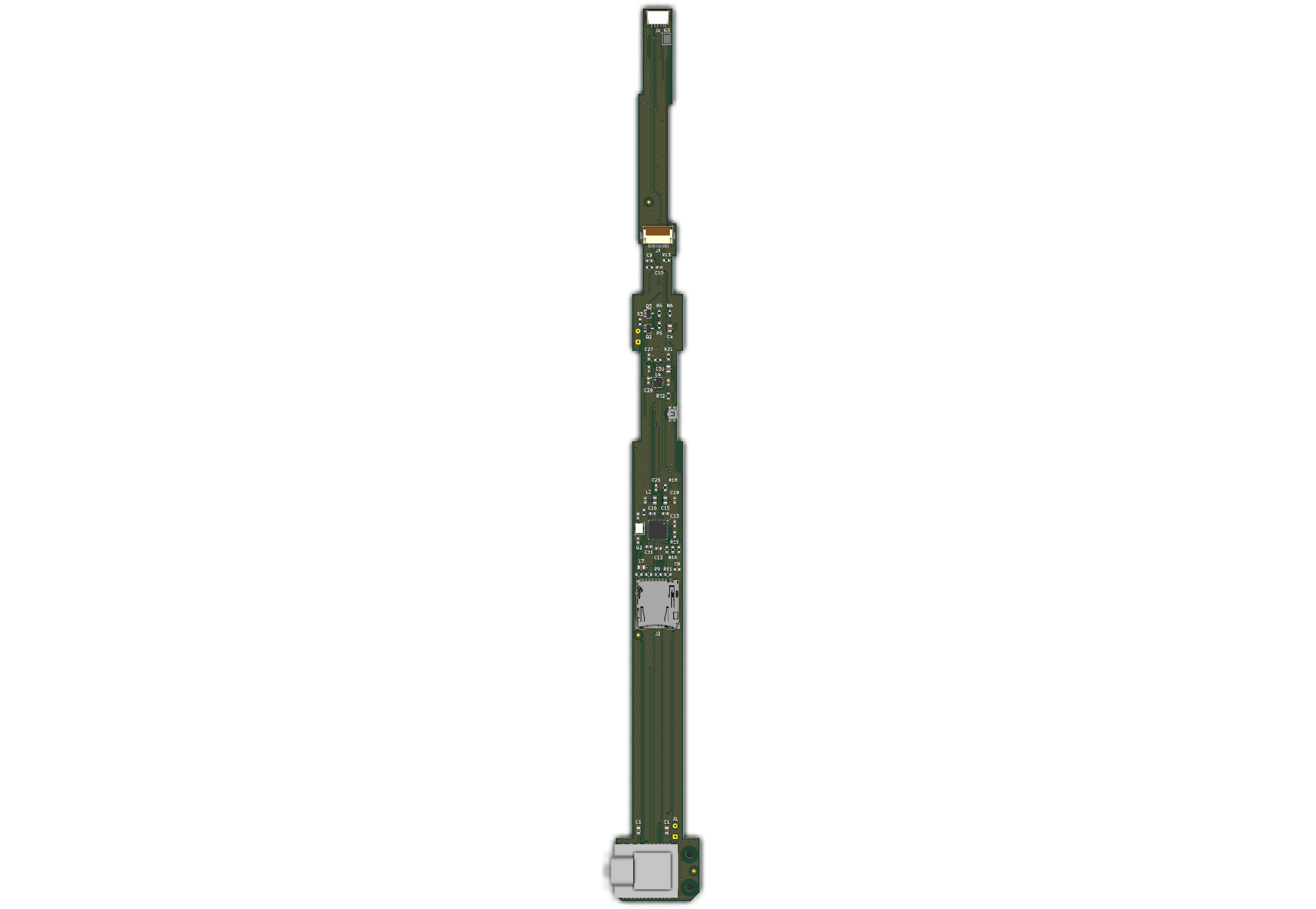
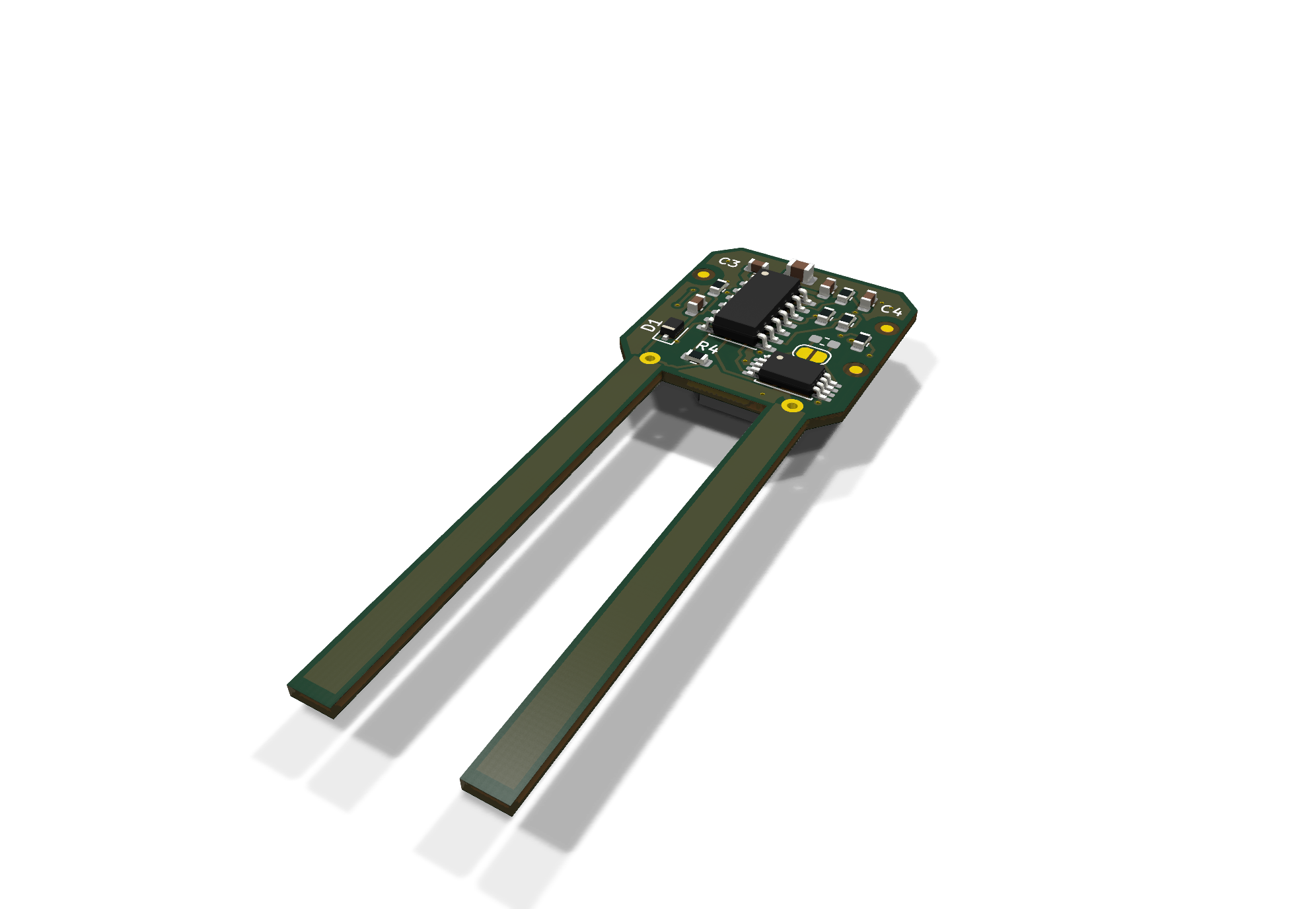
    The wand does the thinking: a long, stepped carrier for a XIAO ESP32-S3 Plus runs most of its length. The sensor is a tiny custom board whose two tines are its prongs. They never pair and share no radio: the sensor's NFC tag is the link, powered by the wand's own field.

    0 / 0Both boards: DRC violations and unrouted connections, and both fit their enclosures in the CAD check
    297 mmThe wand board, end to end: one long, stepped two-layer strip
    ≈ 1 µAThe sensor's average draw: about 4 years on a CR1220 (estimate)
    ~6 weeksThe wand on a ~550 mAh LiPo at 10 check-ins a day (estimate)

    Wand board297 × 28 mm at the foot

    Routed in KiCad with Freerouting
    The wand's long, narrow board lying on its side: the XIAO at the left end, then the microSD socket, the NFC reader, the speaker amp, the button, the screen connector and the orb connector at the right end

    The whole board, foot on the left. About fifteen signals run nearly 300 mm from the XIAO in the ferrule to the screen and the orb, on two layers and as narrow as 10 mm.

    Sensor board19 × 56 mm

    Routed in KiCad with Freerouting
    Wand U1 · XIAO ESP32-S3 Plus

    The brain

    16 MB of flash and 8 MB of PSRAM: the setup an open-vocabulary speech-to-text model (Cactus Whistle) has been shown running on. Its USB-C charges the wand and doubles as the export port. Its radio stays off.

    Wand U2 · PN532 + coil in the orb

    The reader

    The NFC reader every maker library knows. Its coil sits on the disc under the orb, at the end of a five-wire harness up the shaft, so the orb is literally the part that reads.

    Wand J2 · microSD

    The journal

    Holds every reading, voice note and transcript. Plugged into a computer, the wand shows up as a USB drive called PLANTASIA: no app, no internet.

    Wand U3, U4 · PDM mic, PAM8302A

    Ears and chimes

    A digital mic behind the pinhole for notes, and a small amp driving a speaker behind the back grille for the chimes. Both are switched off in deep sleep.

    Sensor U1 · ATtiny1614

    A coin-cell brain

    No ESP32 runs happily on a coin cell, so the sensor gets a tiny microcontroller that sleeps at under 1 µA, wakes on its own timer every hour, measures and goes back to sleep.

    Sensor U2 · NTAG I2C plus 2k

    Tag and memory in one

    The NFC tag the wand reads, and the memory that holds 60 days of hourly readings. Its field-detect pin wakes the sensor when a wand arrives, for a fresh number.

    Sensor E1, E2 · the tines

    Prongs made of board

    Copper strips on the board's own two tines, under solder mask, form a capacitive soil probe, the classic design: nothing bare to corrode in wet soil.

    Sensor BT1 · CR1220

    Years, not weeks

    A 12 mm coin cell behind the coin door. At about 1 µA on average it should last around four years before anyone opens the door.

    Wand bill of materials (37 lines)
    Loading the parts list…
    Sensor bill of materials (13 lines)
    Loading the parts list…

    How we got here

    In each episode of Product Speedrun, two hosts roll random ingredients and race the idea to a showcase concept. This roll was NFC, soil moisture, a snow globe, a vintage radio and "works fully offline". In the brainstorm the snow globe shrank into a crystal ball on a wizard's wand, the vintage radio loosened into warm walnut and brass, and a voice journal arrived because Jordan wanted to note things like "it has mites". The name nods to Mort Garson's 1976 album of synth music for plants.

    The episode, in short. A quick walk through episode 006, from the idea to the wand, the soil sensor and their boards. Pressing play loads the video from YouTube. Watch it on YouTube
    1. Concept art: the Plantasia wand with callouts, a witch checking a plant, and the soil sensor
      ConceptThe fifth pass: longer, tapered, chimes instead of a voice
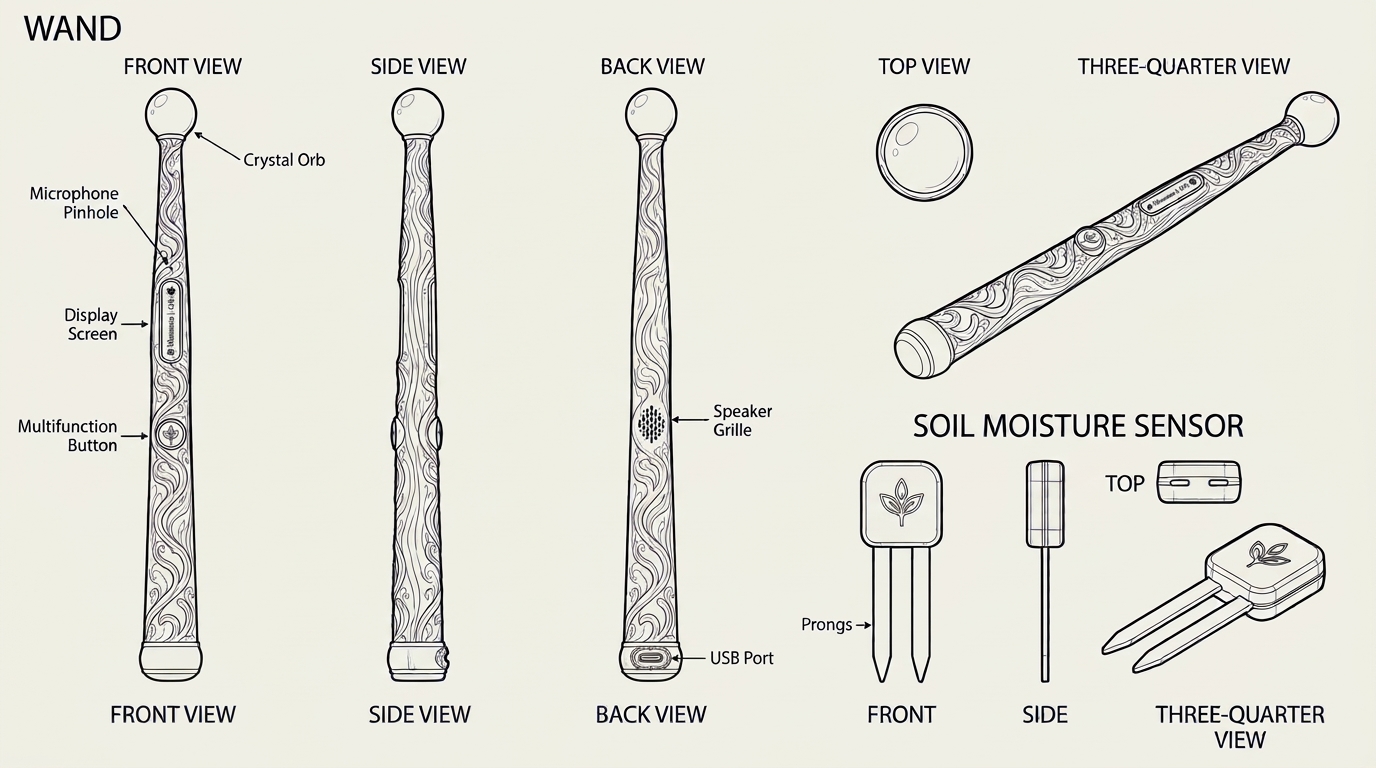
    2. Control drawing: front, side, back, top and three-quarter views of the wand and the soil sensor
      Control drawingBoth devices, with the mic pinhole and back grille
    3. The CAD model: the walnut wand with gold vines, screen and button, and the small grey sensor beside it
      3D modelBoth devices in Solidcraft
    4. The sensor's fork-shaped circuit board: a small head with two chips and two long tines
      ElectronicsThe sensor board: its tines are the prongs

    What we still don't know

    This is a speedrun first pass. Here's what we'd answer before anyone orders a board or carves a wand.

    • Wand board

      What did two layers cost?

      To fit every signal down a board as narrow as 10 mm, four control lines were tied off. In this first pass the screen can't dim, the speaker amp idles at about 4 mA while the wand is awake, and the NFC reader is polled instead of raising an interrupt. A four-layer board, or the brain moved up the wand, would win them back.

    • NFC

      How close does the orb have to get?

      Both coils are small (about 14 mm), so the design aims for a 1 to 3 cm read. The matching parts are placeholders until someone tunes them on a real coil and harness.

    • Voice

      Is on-wand transcription good enough?

      Whistle on this chip ran at about 3× real time in the test we know of, so a 10 s note takes about 30 s. If it's too slow or too sloppy, the recordings stay on the card and the computer can transcribe them later.

    • Sensing

      What does "too dry" mean for each plant?

      The probe needs a dry-and-wet calibration, and every plant type needs its own healthy range. The wand would offer presets; whether they match real plants is untested.

    • Charging

      Five or six hours on the charger

      The XIAO charges at only 100 mA. A faster charger chip is an easy swap for the next revision.

    • Screen

      A big window for a small screen

      The concept's 48 mm screen window is wider than the 22 mm of lit glass behind it. A shorter window would be more honest, but would look less like the concept.

    Build on it

    Everything behind Plantasia is open: the 3D design, the KiCad boards and the notes. Download it, change it, make it, even sell it. All we ask is a credit and a link back.

    Open the project on GitHub

    Continue it with an AI agent

    Paste this into Claude Code, Codex, Cursor or any agent that can run commands. It fetches just this project and its part libraries, reads the notes in the right order, and asks you before it changes anything.

    Hardware under CERN-OHL-P v2, words and images under CC BY 4.0, code under MIT.

    Get each run by email

    A short diary of every episode: the roll, the turns the idea took, and the board at the end. One email per episode.